
How to Optimize an Industrial Chop Saw for Wood with Automated Positioning Systems
Most shops spend a lot of time choosing the right saw. Blade size, motor power, brand reputation, it all matters. But here’s the part people don’t always want to admit: even a solid Industrial chop saw for wood can fall short if the workflow around it isn’t dialed in.
The issue usually isn’t the saw. It’s everything happening before and after the cut. Manual measuring, inconsistent positioning, and operator fatigue all add up. That’s where RazorGage comes in. Instead of replacing your saw, the smarter move is optimizing how it works. And that’s where automated positioning systems start making a real difference.
The Real Problem: Inefficiency in Manual Saw Operations
The process requires multiple steps, which include measuring, marking, adjusting, and rechecking before proceeding to the subsequent cut. The process requires a lengthy time period for execution. The process contains simple elements that can lead to mistakes.
The operator plays a vital role in executing the complete manual workflow. The results become unpredictable because of three factors, which include the operator’s experience and current focus, and their level of exhaustion throughout the work shift. During extended production periods, small errors accumulate. The process begins with a small things, which becomes a complete situation when multiple errors occur at different points. The outcome results in wasted materials or components that fail to match properly.
All the precise cuts that are possible from having a high-quality industrial wood chop saw are destroyed by improper positioning. The saw cuts according to the location of the material. The result will produce incorrect outcomes when the material placement lacks precise accuracy.
What Is an Automatic Saw System?
An automatic saw system isn’t just about the saw itself. That’s a common misunderstanding. It’s a combination of components working together, your saw, plus positioning systems, measurement controls, and sometimes software that manages cut lists. Instead of relying on manual input for every cut, the system handles positioning with consistent accuracy.
This removes guesswork. Operators aren’t measuring every piece from scratch. They’re working with a system that already knows where the material needs to be. At RazorGage, the focus isn’t on replacing your saw. It’s about turning your existing setup into something far more efficient. That’s where material positioning systems come into play.
How RazorGage Transforms Chop Saw Stations
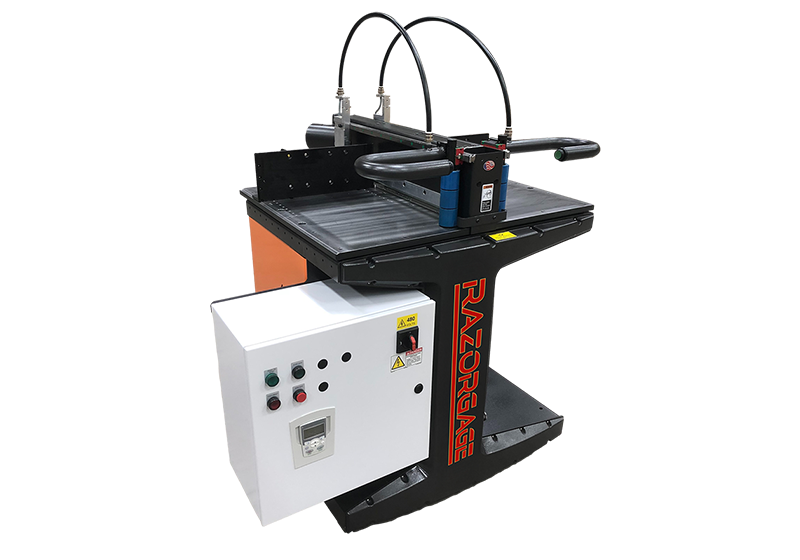
RazorGage doesn’t manufacture chop saws. That’s important to keep clear. What they do is take a standard saw station and turn it into a high-performance cutting system. The core of that transformation is the RazorGage positioner. It acts as a precise saw stop, ensuring each cut is placed exactly where it needs to be. Once programmed, it repeats that position over and over without drift.
Instead of measuring each piece manually, the operator loads the material, and the system positions it accurately. That consistency alone changes how a shop operates.
It also reduces dependency on operator skill. New team members can achieve accurate results faster, while experienced operators can focus on throughput instead of constant measuring. Another thing, this isn’t about ripping out your current setup. RazorGage systems are often added to existing saws. It’s an upgrade, not a full replacement.
Precision Starts with Proper Material Control
A saw can only cut as accurately as the material is positioned and held. That’s where many setups fall short.
RazorGage systems use controlled positioning, along with manual or automatic clamps, to hold material securely during the cut. This is critical. The material doesn’t shift, doesn’t drift, and doesn’t rely on operator force to stay in place.
That stability leads to cleaner, more consistent cuts. Not because of the blade alone, but because the entire process is controlled. Smooth motion, secure holding, repeatable positioning. It all works together. This is where shops start seeing real improvement. Not just in accuracy, but in confidence. When the system holds tolerances consistently, downstream processes get easier too.
Efficiency Gains You Actually Notice
Automation isn’t just about speed. It’s about reducing wasted effort.
With manual workflows, a lot of time is spent on tasks that don’t add value, such as measuring, marking, and double-checking. Automated positioning cuts that out. The system already knows where to place the material. Throughput improves, but not in a chaotic way. It’s controlled. Predictable. You’re producing more usable parts, not just moving faster for the sake of it.
Labor efficiency improves as well. One operator can manage more output without feeling overwhelmed. And because the process is consistent, you’re not constantly fixing mistakes or reworking parts. For shops focused on efficiency in wood cutting, this shift is hard to ignore once you see it in action.
Advanced Optimization with Software Integration
This is where things start getting even more interesting.
RazorGage systems can integrate with AutoList optimization software. Instead of manually planning cuts, the software analyzes your cut list and determines the most efficient way to process material. It reduces waste by optimizing how each piece is cut from available stock. That alone can have a noticeable impact on material costs over time.
But it also simplifies planning. Operators aren’t guessing or manually organizing cuts. The system provides a clear, optimized sequence.
When combined with material positioning systems, the entire workflow becomes streamlined. Planning, positioning, and cutting it all connect. You’re not just cutting faster. You’re cutting smarter.
Applications Across Woodworking Operations
This kind of system isn’t limited to one type of shop. Whether you are building cabinets or manufacturing doors and windows, the need for accuracy and repeatability is the same. Parts have to fit. Measurements have to stay consistent.
Cabinet shops benefit from precise cut lengths and reduced rework. Door and window manufacturers rely on tight tolerances across large production runs. Furniture makers need consistency, especially in batch production.
Even smaller shops see value. The ability to improve output without increasing labor can make a big difference. And for high-volume operations, the gains scale quickly. Less waste. More consistency. Better overall workflow.
Safety Improvements You Can’t Ignore
Safety often gets overlooked in conversations about efficiency, but it shouldn’t.
By reducing manual handling and repetitive measuring, the system also lowers the risk of operator fatigue-related errors. And fewer errors usually mean fewer accidents.
It’s not just about working faster. It’s about working smarter and safer at the same time.
Conclusion
The saw itself is only part of the equation. Always has been. You can invest in the best saw on the market, but if your positioning and workflow are inconsistent, you’ll never get the performance you expect. That’s where most shops hit a ceiling without realizing why.
RazorGage changes that. By adding automation and precise positioning, it turns a standard chop saw setup into a system that delivers consistent, repeatable results.
Less waste. More output. Fewer headaches.
It’s not about replacing your saw. It’s about making it work the way it should have from the start.
FAQs
Can I improve my current saw without replacing it?
Yes. RazorGage systems are designed to upgrade existing saw setups. By adding positioning systems and automation, you can significantly improve accuracy and efficiency without investing in a completely new saw.
How do material positioning systems improve accuracy?
They ensure every piece is positioned exactly the same way for each cut. This consistency eliminates guesswork and reduces variation across production runs, helping operators achieve precise, repeatable results every time.
Is automation only useful for high-volume shops?
Not at all. While high-volume operations benefit greatly, smaller shops also see improvements in efficiency, reduced waste, and easier workflows with automated positioning systems.
What role does software play in saw optimization?
Software like AutoList plan cuts more efficiently. It reduces material waste and organizes production, making the entire cutting process faster and more consistent.
Ready to get more out of your saw without replacing it?
Upgrade your system with RazorGage and see how material positioning systems can transform your workflow.